

Autonomous Retail Ecosystems: Transforming the Future of Shopping
The future of shopping is here, no manual checkouts, no scanning, and no waiting. Imagine walking into a store, selecting the products you need, and leaving without standing in line or stopping at a checkout counter.
As consumer expectations evolve, retailers are adopting AI, automation, and connected technologies to deliver faster, more convenient, personalized shopping experiences in both online and physical stores. This has given rise to autonomous retail ecosystems, intelligent environments that simplify the shopping journey while boosting operational efficiency, helping businesses meet the demands of modern consumers.
Autonomous Systems
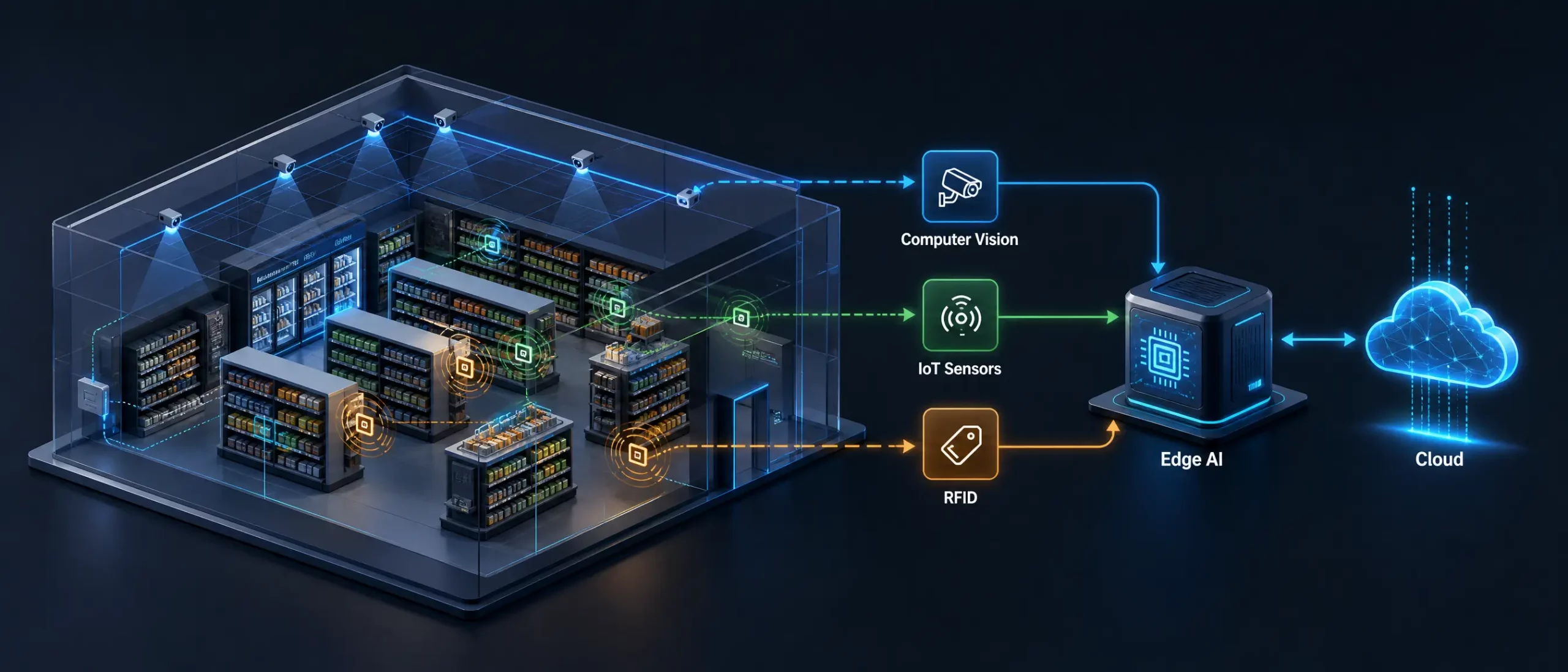
Autonomous automation refers to the use of multiple technologies that can perform tasks with minimal human involvement. In retail, this includes Artificial Intelligence (AI), Machine Learning (ML), computer vision, Internet of Things (IoT) sensors, RFID technology, robotics, and cloud computing platforms.
Key Technologies Behind Autonomous Retail
Artificial Intelligence (AI) and Machine Learning (ML): AI helps stores understand customer preferences, predict what products will be needed, and improve shopping experiences. Machine learning helps AI get smarter over time by learning from data.
Computer Vision: A technology that allows cameras to see and recognize products, people, and actions inside a store, making checkout-free shopping possible.
Internet of Things (IoT) Sensors: Small connected devices that collect information, such as how many products are on a shelf or whether a product needs restocking.
RFID (Radio Frequency Identification): A tracking technology that uses small tags to identify and locate products quickly and accurately.
Together, these technologies reduce manual work, improve accuracy, and help retailers respond quickly to customer needs.
Autonomous Shopping: The Future of Shopping
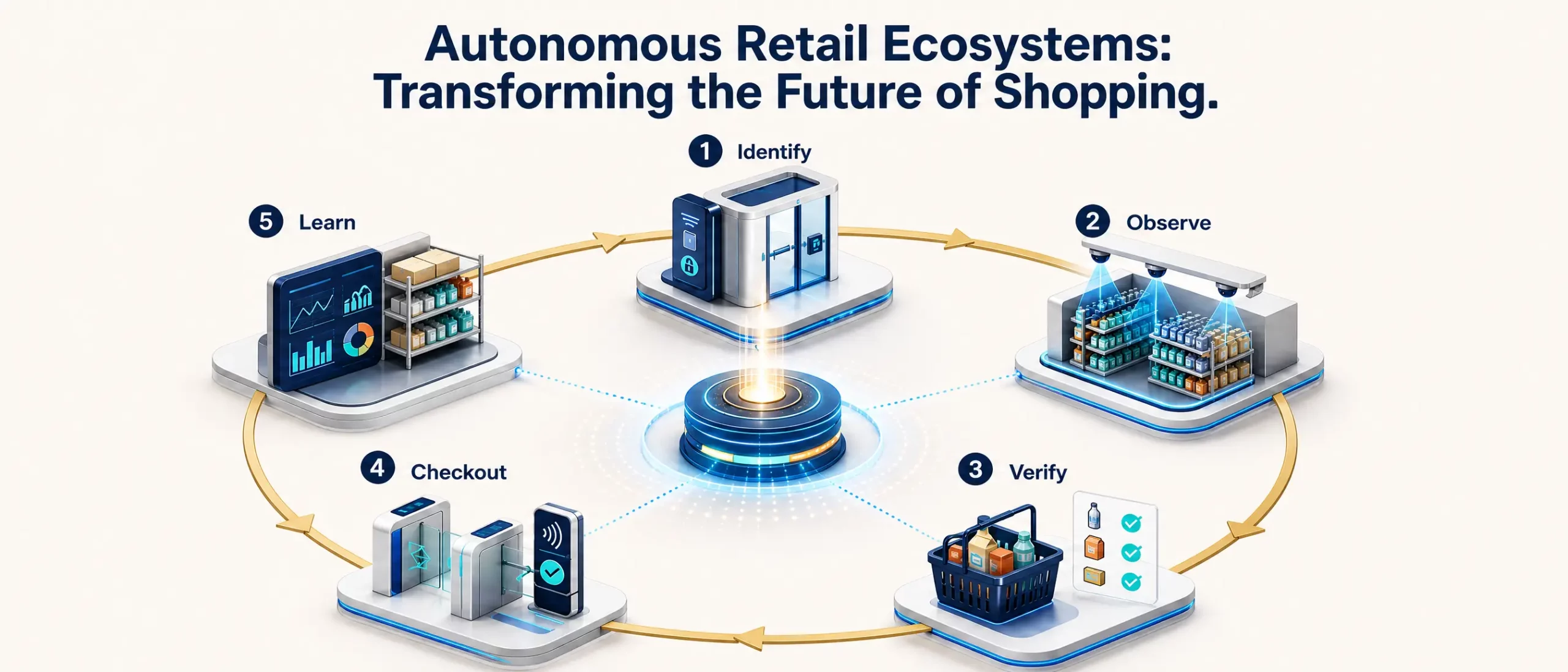
Autonomous shopping is changing the way consumers interact with brands. Instead of dealing with checkout processes or unavailable products, customers can enjoy a faster and more convenient experience. The process starts with the entry of the customer with no hassle but only the joy of shopping, followed by the workflow.
- Entry & Identification – The store recognizes you the moment you walk in.
- Real-Time Monitoring Begins – Cameras and sensors start quietly watching your every move.
- Product Detection & Verification – Two systems double-check exactly what you picked up.
- Virtual Cart Update – Your cart fills up automatically, no scanning needed.
- Inventory Sync – The shelf tells the store when it’s running low, in real time.
- Exit & Automatic Checkout – You walk out, and the system bills you instantly.
- Data Feedback Loop – Your shopping trip teaches the store how to serve you better next time.
Final Summary
Autonomous Retail Ecosystems are changing the way people shop by making retail faster, smarter, and more convenient. Using AI, automation, and connected technologies, retailers can offer personalized experiences, manage inventory in real time, and enable checkout-free shopping.
As customer expectations grow, businesses that adopt autonomous retail can improve efficiency, enhance customer experiences, and stay competitive in the digital marketplace.
The future of retail is smarter, faster, and more connected. Ready to transform your business? Reach out to us at marketing@tychons.com