


Magento vulnerability exploited despite July security patch
Unpatched Magento Stores Are Now Being Targeted
If your Magento or Adobe Commerce store hasn’t received Adobe’s July security updates, now is the time to act.
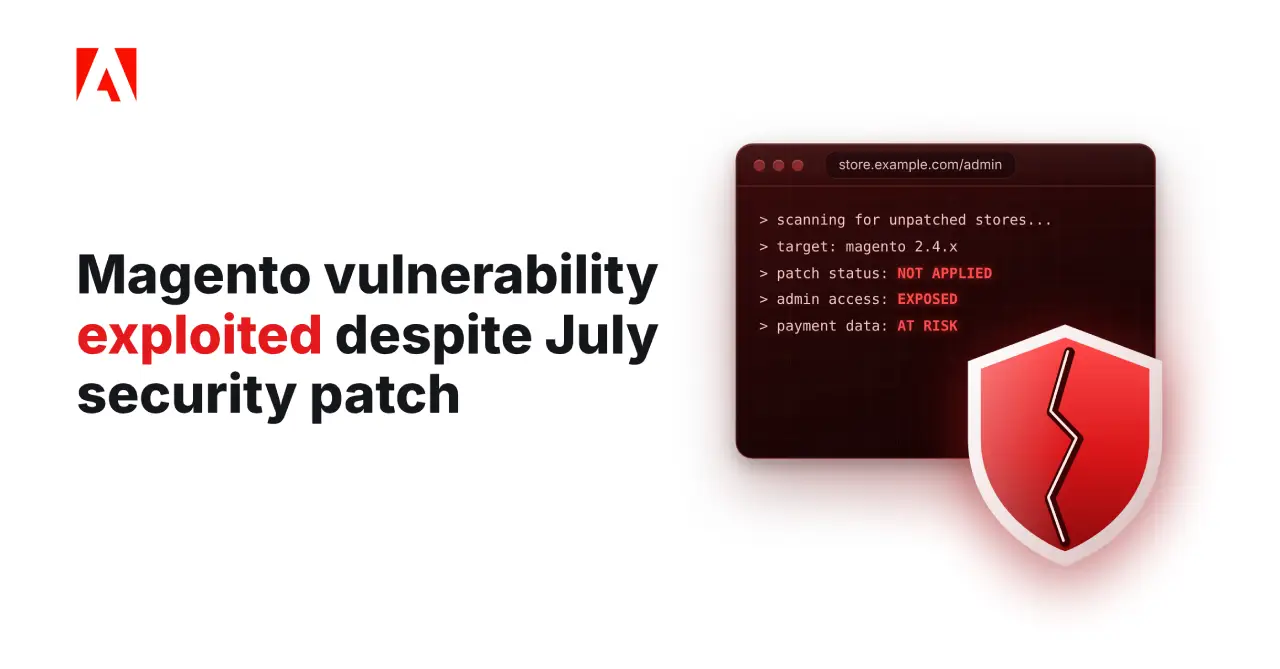
Security researchers have reported that attackers are actively exploiting a Magento vulnerability that was addressed in Adobe’s July security release. This follows a familiar cybersecurity pattern. Once a patch becomes publicly available, attackers analyze the fix, identify the underlying weakness, and begin looking for organizations that have not updated their environments. Unfortunately, unpatched stores become some of the easiest targets.
For Magento and Adobe Commerce merchants, the risk is significant. A successful compromise can expose customer information, payment integrations, API credentials, and other business-critical data. In some cases, attackers may gain enough access to install malware, create hidden backdoors, or take control of key administrative functions.
Why a Patched Vulnerability Becomes More Dangerous
Many businesses assume a vulnerability becomes less relevant after a patch is released. In reality, the opposite is often true. A security patch can inadvertently provide attackers with clues about the exact flaw that was fixed. By comparing older code with the updated version, threat actors can often determine how the vulnerability works and develop methods to exploit stores that remain unpatched.
This creates a dangerous window for businesses that delay updates due to testing requirements, customization concerns, or limited resources. Once exploit techniques become available, attackers can scan the internet and identify vulnerable stores at scale.
What Merchants Should Be Concerned About
Magento stores frequently process sensitive customer and business information. Because of this, even a single successful attack can have consequences that extend well beyond the website itself.
A compromised store may experience customer data theft, unauthorized administrative access, malicious code injections, payment skimming attacks, and significant reputational damage. Businesses may also face compliance risks, operational disruptions, and a loss of customer trust that can take months to rebuild.
What’s particularly concerning is that many compromised stores continue functioning normally. Merchants often discover breaches only after suspicious activity, customer complaints, or security audits uncover the issue.
Signs Your Store May Have Been Compromised
Several indicators may suggest unauthorized access or malicious activity within a Magento environment. Unexpected admin accounts, unexplained code changes, suspicious JavaScript files, degraded website performance, modified core Magento files, and unusual server activity should all be treated as warning signs.
Customer complaints regarding checkout behavior, redirects, or unexpected payment issues may also indicate a potential compromise. If any of these symptoms are present, immediate investigation is strongly recommended.
What You Should Do Right Now
The first step is to verify that your Magento or Adobe Commerce environment is running a supported version and that all July security updates have been successfully applied. Businesses should not rely solely on deployment records; validating the live production environment is equally important.
Next, review server and application logs for unusual activity, especially around administrative access and code changes. Organizations should also conduct a comprehensive security assessment to identify malware, hidden backdoors, unauthorized accounts, or configuration weaknesses that may remain even after patching.
As an additional precaution, many security professionals recommend rotating admin passwords, API credentials, database credentials, and integration tokens. Reviewing third-party extensions is equally important, as outdated or unsupported extensions can introduce vulnerabilities even when the Magento core platform is fully updated.
Security Requires Ongoing Attention
One of the biggest misconceptions in eCommerce security is that applying a patch eliminates risk. Security is an ongoing process that requires continuous monitoring, regular patching, vulnerability assessments, and proactive maintenance.
Organizations that consistently review and strengthen their Magento environments are far less likely to become victims of cyberattacks than those that only react when a critical advisory is announced.
Final Thoughts
The Magento vulnerability fixed in July is no longer just a theoretical concern. Attackers are actively looking for stores that failed to apply the available security updates.
If you’re unsure whether your Magento or Adobe Commerce store has been patched correctly, now is the time to verify. A proactive review today can prevent a costly security incident tomorrow.
At Tychons, we help merchants assess Magento environments, identify security gaps, apply critical updates, and improve their overall security posture.
Contact us at marketing@tychons.com to schedule a Magento security review and ensure your store remains protected.