

From AI Assistants to AI Agents: The Rise of Autonomous AI Agents
“The next evolution of AI isn’t smarter conversations, it’s smarter execution”.
AI assistants have already changed how we work by helping us write emails, summarize documents, generate code, and answer complex questions. But they still depend on people to make decisions and carry out next steps.
That is beginning to change.
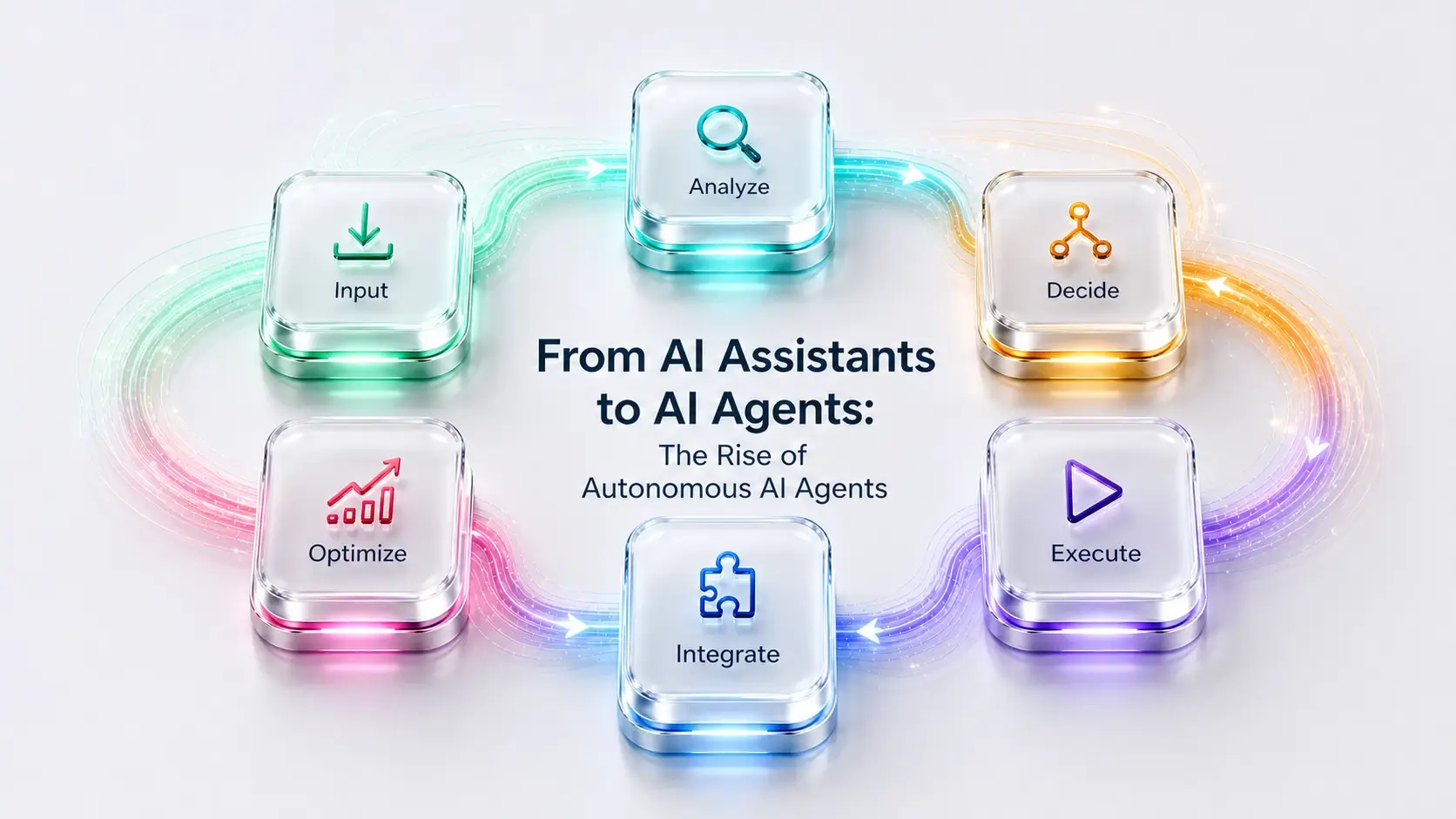
A new generation of AI, known as AI agents, is moving beyond simply assisting users. Instead of waiting for instructions at every stage, autonomous AI agents can understand a goal, plan the required steps, use external tools, and complete entire workflows with minimal human intervention. This shift is often called agentic AI, and it is changing how businesses approach automation.
AI Agents vs. AI Assistants
- AI assistants: Reactive, single step, require human follow-through
- AI agents: Proactive, multi-step, capable of completing full workflows with human oversight and guardrails
For example, imagine you’re planning a trip to a foreign country. An AI assistant can help you draft a list of things to pack or suggest a few tourist spots.
An AI agent can go further by checking visa requirements, comparing flight options, booking accommodation within your budget, arranging local transport, and adjusting the itinerary in real time if a flight gets delayed, all without you having to manage each step yourself.
How AI Agents Are Transforming Businesses
Organizations are using AI agents for enterprise AI automation across several areas. Customer support teams can resolve common queries more efficiently, software development teams can automate coding and testing tasks, and business operations teams can streamline approvals, reporting, and data management. Rather than replacing people, AI agents act as intelligent digital teammates freeing employees to focus on strategy, innovation, and customer engagement.
Why Businesses Are Investing in AI Agents
- Execute tasks quickly and consistently across connected systems.
- Reduce delays and improve accuracy without constant human guidance.
- Scale operations such as customer requests, marketing, and internal workflows without significantly increasing cost or manual effort.
- Support broader digital transformation goals with faster, smarter operations.
Human Oversight and AI Governance Remain Essential
AI agents operate with greater autonomy, but they aren’t designed to replace human judgment. Organizations need clear goals, permissions, and guardrails and key parts of AI governance to keep AI systems secure, ethical, and compliant.
The most successful organizations will combine the speed of AI agents with the experience and judgment of people, following a human-in-the-loop approach.
The key is starting small such as targeting workflows where autonomy adds real value, with clear boundaries in place.
Bottom Line
The shift from AI assistants to AI agents marks a major change in the future of work. AI is moving from simply providing recommendations to planning, executing, and completing meaningful tasks on its own.
Businesses that embrace agentic AI will be better positioned to improve efficiency, automate repetitive work, and focus on innovation. The future won’t be defined by smarter conversations alone, it will be defined by smarter execution.
Looking to integrate AI agents into your business?
Reach us at marketing@tychons.com to discover how Tychons can help accelerate your AI transformation.