

RAG vs Fine-Tuning: Choosing the Right AI Strategy for Your Business
Businesses everywhere want AI that is more accurate, more useful, and better suited to their needs. Two of the most common ways to get there are Retrieval Augmented Generation (RAG) and fine-tuning. Both customize AI for business use, but they solve different problems.
Knowing how they differ will help you choose the right approach for your data, goals, and budget.
What Is RAG?
Retrieval-Augmented Generation (RAG) lets an AI system look up external information before it responds. Rather than relying only on what the model learned during training, RAG connects it to your own sources, such as documents, databases, websites, product catalogues, and internal knowledge bases.
For example, Take a customer-support chatbot. With RAG, it can pull the latest product details, company policies, or FAQs before answering a customer’s question. RAG gives AI access to the right information at the right moment.
What Is Fine-Tuning?
Fine-tuning means training an existing AI model on a specialized dataset, so it performs tasks better. Instead of handing the model new information to refer to, fine-tuning teaches it specific patterns, behaviours, formats, and response styles.
For instance, a business could fine-tune a model on past customer-support conversations, so it replies in a consistent tone and follows the company’s communication style. fine-tuning teaches AI how to do a task in a particular way.
RAG vs Fine-Tuning: What Sets Them Apart
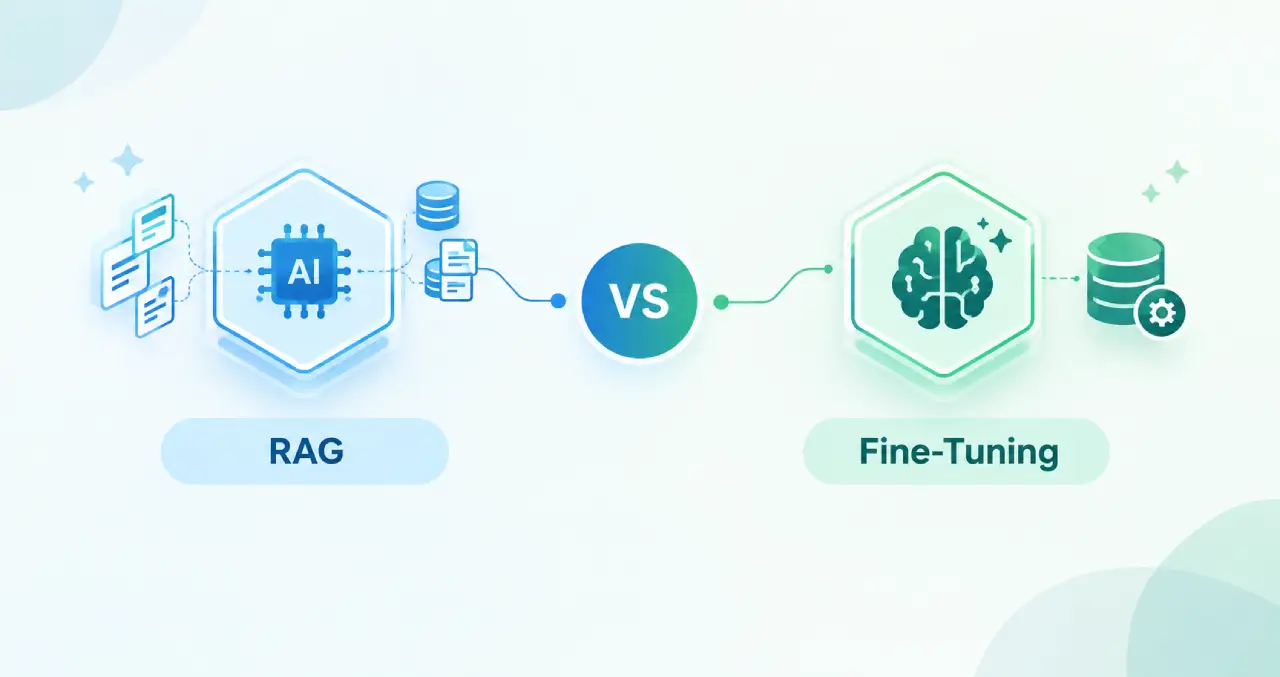
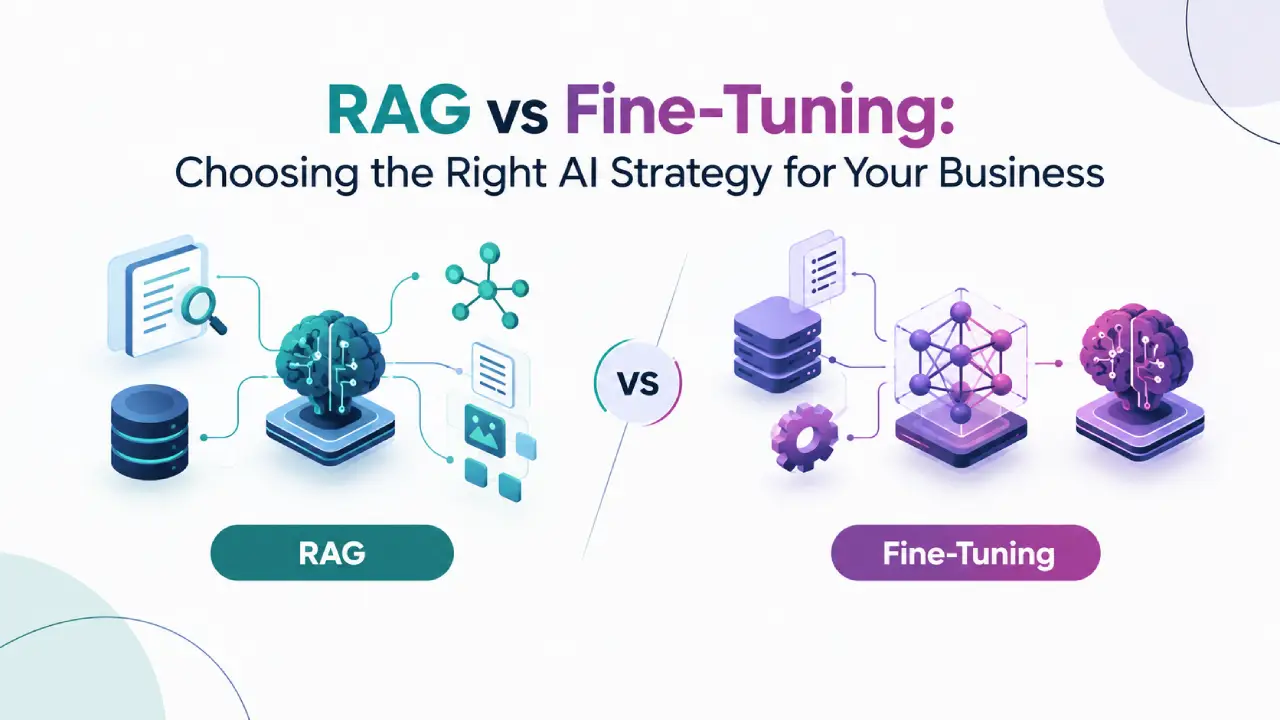
The core difference is what each one improves. RAG improves what the AI knows by giving it relevant, up-to-date information. Fine-tuning improves how the AI behaves by teaching it how to respond or perform a task.
RAG works especially well when your information changes often. You can update your knowledge base, documents, or databases without retraining the model, which makes it a strong fit for customer support, internal knowledge systems, product information, and business assistants.
Fine-tuning is the better choice when you need the AI to follow a specific style, format, workflow, or specialized task. Common uses include text classification, structured responses, specialized content generation, and industry-specific applications.
Choosing the Right Approach
The right choice depends on what you need your AI system to do. Start by asking whether your challenge is about knowledge or behaviour.
- Choose RAG when the AI needs access to current, company specific, or frequently changing information. This is the right fit for use cases like customer support, internal knowledge assistants, and product or policy lookups, where answers must reflect the latest data. Because you can update your documents or databases without retraining the model, RAG keeps responses accurate, and it makes it easier to trace an answer back to its source.
- Choose fine-tuning when your main goal is to improve the AI’s behaviour, response style, or performance on a specialized task. This works well when you need a consistent brand voice, structured outputs, or reliable results on tasks like classification or industry-specific content generation. Fine-tuning requires quality training data and more technical effort, but it can deliver more consistent and precise results once the model is trained.
Many businesses find that using both works best. Fine-tuning shapes how the AI responds, while RAG supplies the latest information, so its answers stay relevant and accurate.
Final Thoughts
RAG and fine-tuning are both effective ways to customize AI, and each solves a different problem. RAG gives AI the knowledge it needs, while fine tuning helps it perform tasks with greater precision.
Once you understand the difference, it becomes much easier to choose the approach that fits your data, objectives, budget, and long-term AI strategy. For more advanced use cases, combining the two can lead to smarter, more capable AI solutions.
Looking to build a customized AI solution for your business? Reach out to us at marketing@tychons.com.